Compliance engine
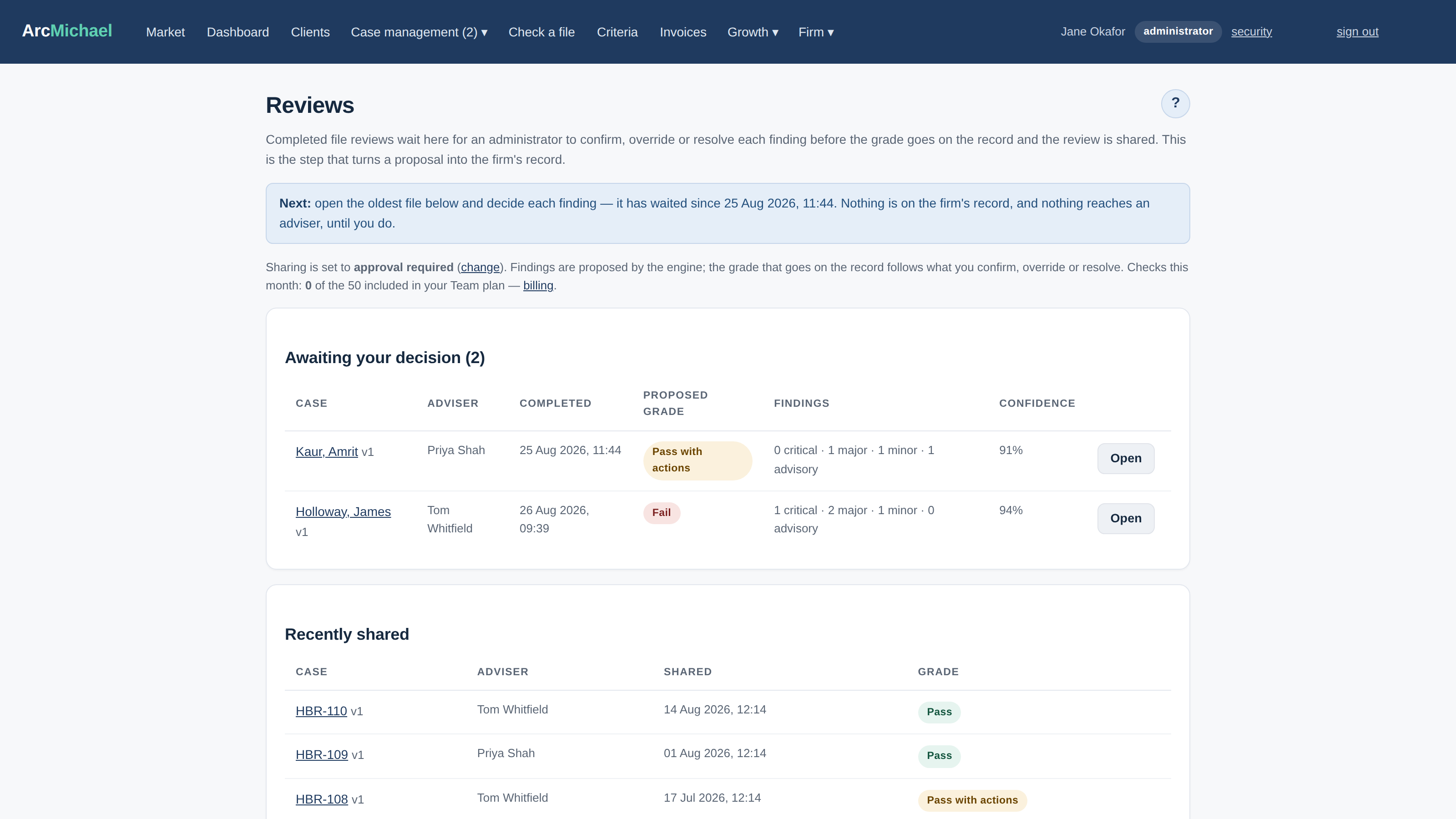
The engine runs a versioned rule-set over a case file and proposes findings. Each finding names the rule, points to the page, states the severity and suggests a resolution. It is a first pass with evidence attached, built for a reviewer who will check it.
ArcMichael supports your compliance process. It does not replace your judgement, and you remain responsible for the advice you give and the files you submit.
Five file types
Purchase P
First-time buyer, home mover, Help to Buy and shared ownership. Deposit source and gift letters, memorandum of sale cross-checked against the ESIS, affordability evidence, ID and address.
Remortgage R
Like-for-like and additional borrowing. Debt-consolidation justification, existing-lender comparison, term and repayment-type changes, early repayment charges shown.
Buy-to-let B
Consumer and business BTL, portfolio landlords. Interest cover at the configured ratio, rental evidence, portfolio schedule, tax-status treatment.
Product transfer T
With and without further advance. Advice record for the transfer, comparison against the open market, suitability where advice was given.
Protection I
Life, critical illness, income protection, family income benefit. Demands and needs, quote comparison, medical disclosure, trust recommendation, commission disclosure.
Common rules (C) apply to every file: terms of business dated before advice, ESIS before application, three months of statements and payslips with the latest inside the configured window, ID accepted under JMLSG guidance and in date, suitability letter covering every MCOB 4.7A factor and the Consumer Duty outcomes, vulnerability assessment. Cross-document consistency (X) and document quality (Q) rules run on every file.
Severity and grade
Critical
Any Critical finding grades the file Fail. Missing or out-of-date ID, no affordability evidence, a deposit with no traceable source.
Major
Pass with actions to be resolved before submission. A statement outside the window, a suitability letter missing a required factor.
Minor
Pass with actions due within ten working days. Record-keeping gaps that do not change the advice.
Advisory
Informational. Worth knowing, nothing to fix.
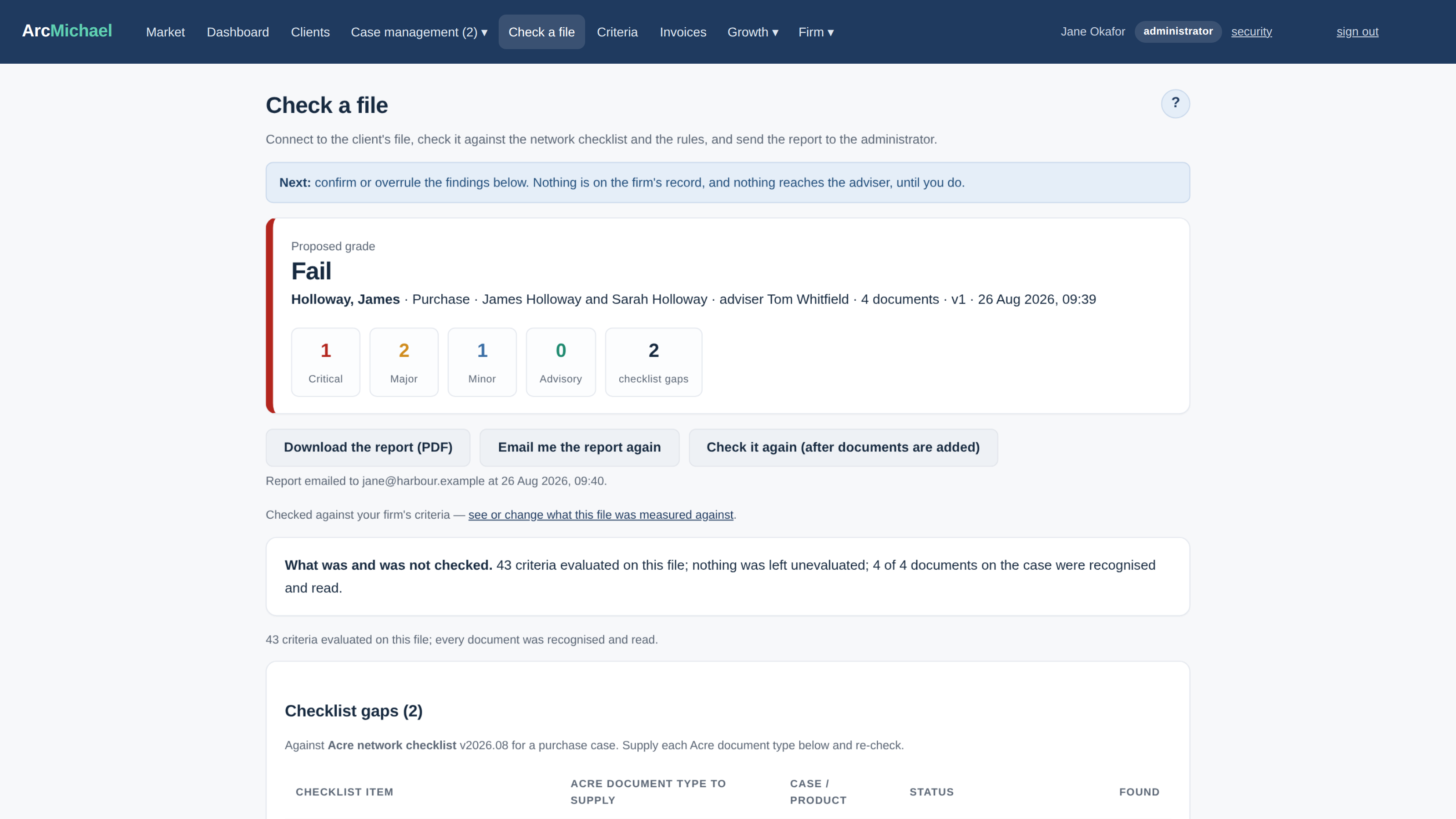
What a finding looks like
An illustration with fictitious data. Rule identifiers, wording and thresholds are those of the firm's rule-set version.
Thresholds are yours
Every threshold is a parameter with a default from the rule-set and a per-firm override: the 35-day window for the latest statement and payslip, the three months of statements, interest-cover ratios at 125 and 145 per cent, the age of a credit report. Set them to match your network's checklist and the engine checks against your numbers, not ours.
Absence is stated
Where a finding relies on absence - "no gift letter found" - the engine says which document classes it searched, so the reviewer can see whether a document was missing from the file or simply filed under a name the classifier did not expect.
Confidence and the run ledger
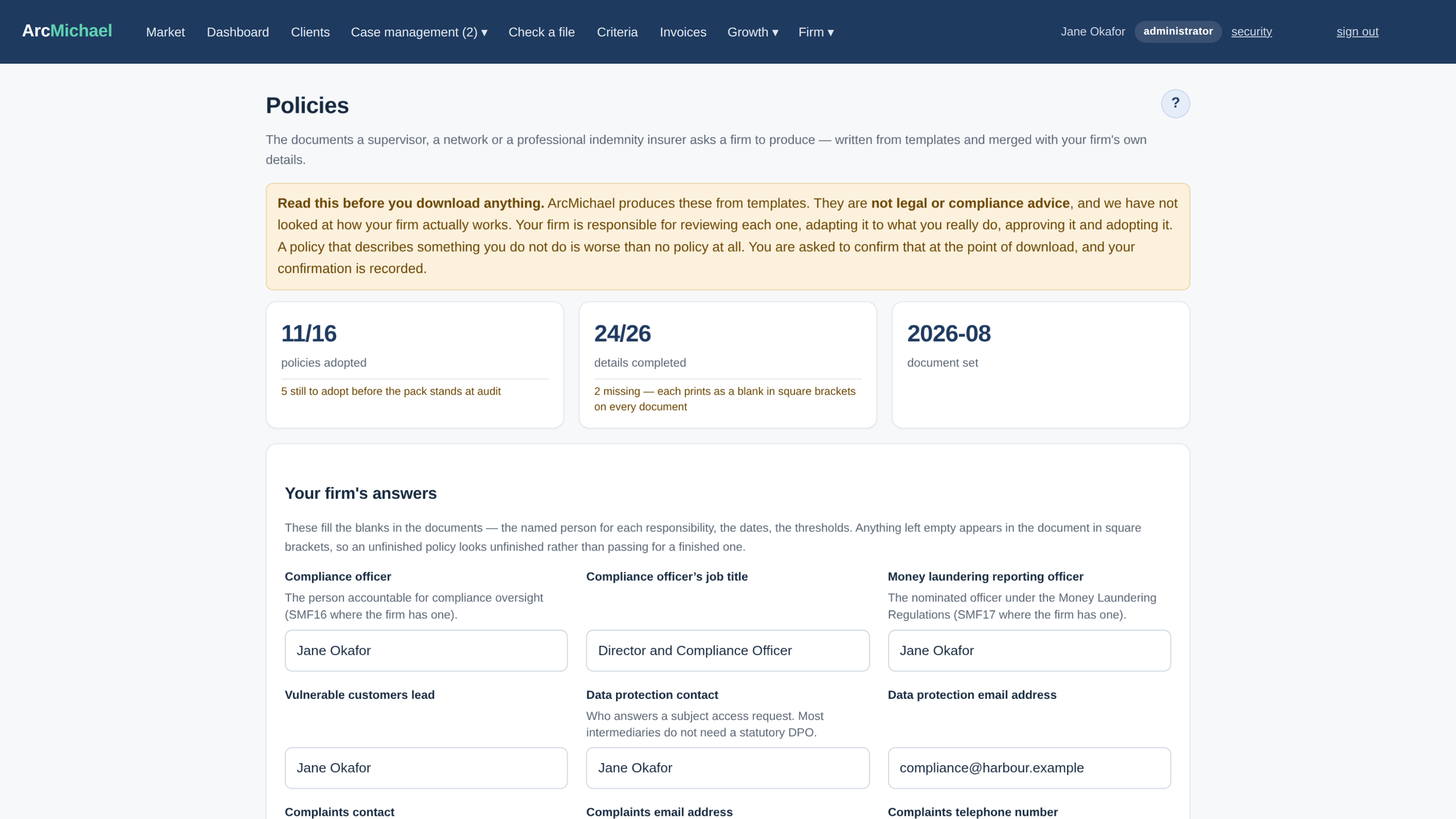
Each run is written to a ledger with the rule-set version, model versions, input hashes and a confidence figure. Confidence is a statement about how well the engine could read the documents, not about whether the advice was right. A low figure flags a file for closer human attention; it never stands in for it. We publish no accuracy percentage until pilot concordance data exists and a firm has agreed to its use.
Sampling on Team and above
T&C sampling rules - 100 per cent of files before an adviser reaches competent status, a risk-based rate after - are set per firm and applied per adviser. The sampling panel shows who is on what rate and which remediations are overdue.